Programa
SPA 203: Exploring the Hispanic world
Instructor
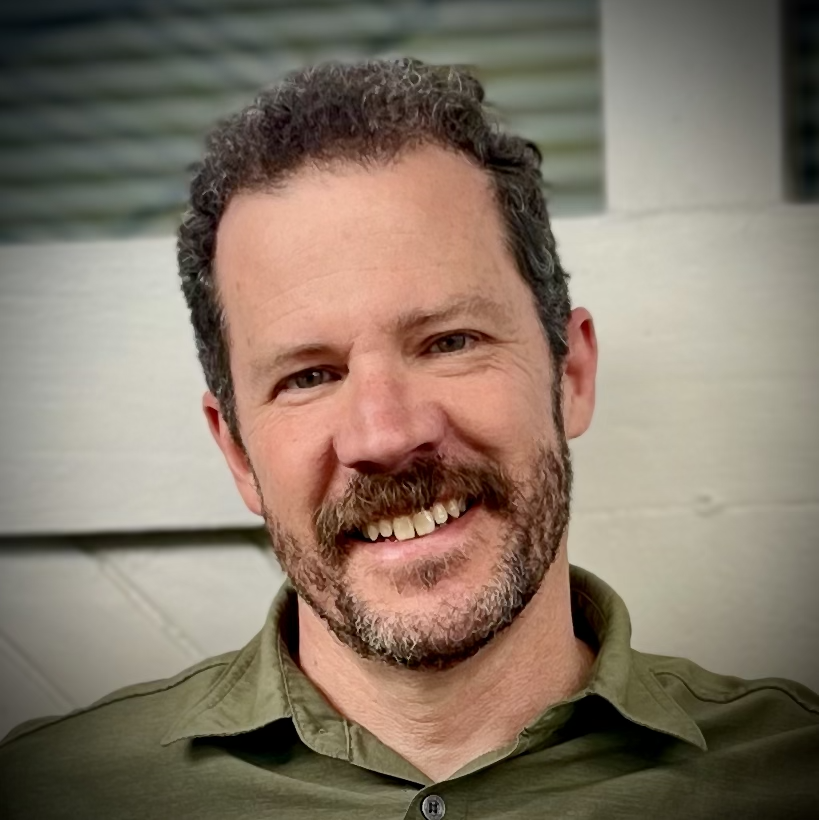
Instructor: Dr. Jerid Francom
Email: francojc@wfu.edu
Office: Greene Hall 518
Appointments:
I. Course Description
This course introduces students to the diverse Hispanic world through the lens of its history, culture, and society. We will explore various cultural manifestations, including literature, art, and music, analyzing their connections to specific historical and social contexts. Simultaneously, the course aims to enhance intermediate-level Spanish proficiency in reading, writing, speaking, and listening comprehension. By engaging with authentic materials and discussing key issues, students will develop critical analysis skills and intercultural competence, laying a foundation for further study in Spanish.
II. Objectives
- Language: Improve writing, speaking, and listening and reading comprehension to understand unadapted literary texts; narrate and describe using the main verb tenses and appropriate vocabulary.
- Critical Analysis: Use appropriate grammatical structures to explore the connections between various artistic expressions and their historical and cultural contexts.
- Intercultural Competence: Identify and explain the differences between these contexts and one’s own. Recognize biases when analyzing foreign cultures. Develop the ability to overcome those biases to mediate between one’s own culture and the foreign culture.
III. Materials
- Textbooks:
- Lambright, Anne and Sharon Foerster, Punto y Aparte: Spanish in Review/Moving Toward Fluency. 6th Edition (Boston: McGraw Hill, 2024).
- Lambright, Anne, Sharon Foerster and Ramonita Marcano-Ogando, Lecturas Literarias: Moving Toward Linguistic and Cultural Fluency Through Literature (Boston: McGraw Hill, 2006).
- Additional Materials: Electronic copies available on Canvas.
- Practice: Grammar and listening comprehension exercises available online
IV. Evaluation
- Exams (3): 45% (12.5%, 12.5%, 20%)
- Written Compositions (2): 25% (divided into 10% and 15%)
- Participation: 15%
- Individual Interviews (2): 10%
- Oral Presentation: 5%
The grading scale adopted by the Department of Spanish is followed: 93-100=A, 90-92=A-, 88-89=B+, 83-87=B, 80-82=B-, 78-79=C+, 73-77=C, 70-72=C-, 68-9=D+, 63-67=D, 60-62=D-, <60=F.
Deadlines: The deadline is indicated in the class schedule. Failure to meet the deadline will result in a 30% penalty on the grade for that assignment or exam.
V. Evaluation and Participation
Students are responsible for preparing the material for each class, assigned in advance by the professor.
There will be daily evaluations (5 points) and assignments (5 points) throughout the semester. Daily evaluations are completed at the beginning of class. If a student is late or absent, there will be no opportunity to submit the evaluation. For evaluations and assignments, the three lowest grades will be dropped from the final grade.
In addition, if a student does not contribute daily to the discussion, it will affect the final grade of the course. Please review the following evaluation criteria for class participation:
- The student always comes to class, makes meaningful, thoughtful contributions in Spanish by readily asking or answering questions and volunteering to read aloud. The student always speaks Spanish during group or pair work, and is a leader in the class.
- The student always comes to class, often makes meaningful, thoughtful contributions in Spanish by volunteering questions and answers and volunteering to read aloud. The student always speaks Spanish during group or pair work, participates actively in Spanish in the group, and is sometimes a leader in the group.
- The student always comes to class, occasionally volunteers a thoughtful question or answer or volunteers to read aloud. The student always speaks Spanish during group or pair work, and participates actively in the group.
- The student almost always comes to class, but rarely volunteers or contributes in class. During group or pair work, the student tends not to participate, or usually tries to speak in English.
- The student misses several classes and does not contribute to class discussion. The student does not participate, or always speaks in English, during group or pair work.
VI. Additional Information
The Honor Code (from the WFU Bulletin)
Wake Forest University upholds the ideals of honor and integrity. The Honor System is central to University life; its essence is a commitment by each person to do what is right and abide by community standards. Each student is pledged to be trustworthy in all matters, and a violation of that trust is an offense against the community as a whole. In the specific terms of the Honor Code, a student pledges in all phases of life not to cheat, plagiarize, engage in other forms of academic misconduct, deceive, or steal. The strength of the Honor System derives from the commitment of each and every student to uphold its ideals.
The Honor Code as it applies to this course
Certain homework assignments in this course will be written outside of class. You may be tempted to use web-based tools such as AI, grammar checks, and online translators. However, the purpose of these low-stakes assignments is to help you practice the current grammar and vocabulary and receive feedback from your instructor before you are tested on the material. Using these tools can prevent your progress toward proficiency and success in future Spanish courses. Also, be aware that these tools will not be available to you during in-class assessments, and approximately 90% of your grade in this course will be based on in-class assessment. The goal of this course is to teach you human skills that AI doesn’t have; the ability to speak and write Spanish yourself, and the ability to feel confident in your own voice and writing process.
For these reasons, any work to be turned in for this course for a grade, including homework, must be your own individual work. Unless otherwise indicated, you may use your textbooks, a dictionary, or ask me. You may receive no help (no tutors, no friends, no translators [human-, machine-, or web-based]) in the preparation of your compositions or other written work. The ideas and the language must all be your own. Any sign of collaboration, plagiarism, or other unauthorized assistance will be regarded as cheating and may be turned in to the Honor and Ethics Council for investigation. If you are not sure if something constitutes inappropriate assistance on an assignment, please ask me for clarification.
Note: GoogleTranslate and other electronic translators are never acceptable, even to look up a single word. You must use a language dictionary. Electronic translators are NOT dictionaries and do not understand the shades of meaning that a human being does. For example, a ‘cast’ may be a remedy for a broken arm, a group of actors in a play, or the action of tossing a fishing line. A translation program will not see the difference. You MUST use a language dictionary, which offers various options depending on the context. wordreference.com is an acceptable online dictionary. linguee.com is also a good resource for finding examples of words in context.
Class Attendance
Students are allowed three no-questions-asked absences. Every absence after that will lower your final course grade by 1 point. Three tardy arrivals to class will count as one absence.
If you have an anticipated absence that fits the excused criteria, you must speak to me within the first two weeks of classes and provide the necessary documentation.
Emergencies
In the event of an emergency such as a pandemic crisis or natural disaster that prevents classes from meeting regularly, students will be expected to continue their coursework to the best of their ability. If the University should close, Canvas will be the main source of information for the course. I will be available via email and U.S. mail. In the event that Internet access is limited and U.S. mail is the only method for contact, you will be provided with complete access information for me at home, including phone numbers. The syllabus may be adjusted for individuals who were absent, or for the entire class if dismissed by closing.
Classroom etiquette
The Department of Spanish has a policy of no eating, drinking, chewing gum, or smoking in the classroom. Cell phones or any other sound-making devices must be turned off during the whole class period and stored in your backpack or purse. Please take care of any personal needs (using the bathroom, filling water bottles) before class begins.
Announcement from the Office of the Dean
If you have a disability that may require an accommodation for taking this course, please contact the Center for Learning, Access, and Student Success (336-758-5929) within the first two weeks of the semester.